Flags for Unity Website
Consultation
How Community Projects Turn Ideas Into Impact
Lessons from the Rotary Flags for Unity Project
One of the things I enjoy most about consulting is helping turn good ideas into something real. Many organizations have a vision for what they want to accomplish, but the challenge is usually the same: how do we move from inspiration to implementation?
That question comes up whether you’re building a business system, launching a nonprofit initiative, or organizing a community project.
A great example of this is a project I’ve been involved with through Rotary called Flags for Unity.
It started as a simple idea.
But like many good ideas, it quickly grew into something much bigger.
The Power of a Simple Idea
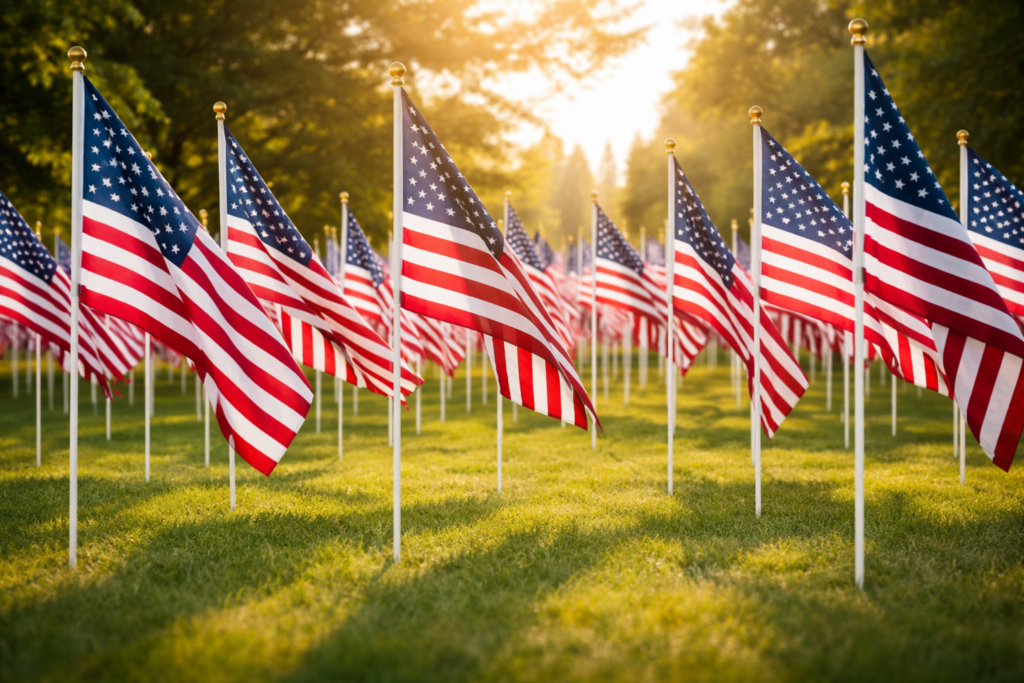
The Flags for Unity project is built on a powerful and visible concept: placing American flags throughout a community to celebrate unity, honor service, and bring neighbors together.
Across neighborhoods, fields of flags become a visual reminder of shared values—service, sacrifice, and community pride.
But behind that simple display is a surprising amount of work.
Projects like this involve:
- Sponsorship and fundraising
- Logistics and setup
- Communications and marketing
- Data tracking and reporting
- Community partnerships
This is where a structured approach becomes essential.
Why Structure Matters in Community Work
Many community projects fail not because people lack passion, but because they lack systems.
When teams are juggling spreadsheets, emails, and handwritten lists, things quickly become difficult to manage. Information gets lost, coordination becomes difficult, and the burden often falls on just a few individuals.
In consulting work, one of the most valuable things we can provide is clarity.
The goal is to help organizations create structure around their mission so that good ideas can scale and sustain themselves.
A common consulting framework for organizational improvement follows a simple cycle:
- Assessment – Understand the current systems, workflows, and risks
- Design – Develop a structured operational model
- Implementation – Deploy tools, processes, and governance
- Training – Help teams adopt the new systems
- Continuous Improvement – Monitor and refine over time
This approach helps organizations move from reactive work to intentional growth.
Community initiatives like Flags for Unity benefit from this same kind of thinking.
Turning a Community Effort Into a Sustainable Program
One of the fascinating things about community initiatives is that they often evolve into something larger than originally imagined.
A project that starts as a small fundraiser can grow into:
- A multi-year community tradition
- A meaningful revenue stream for service projects
- A platform for civic engagement
- A powerful storytelling opportunity
To support that growth, organizations need better tools.
Modern community and nonprofit programs increasingly rely on integrated operational platforms that help manage:
- Relationships with donors and sponsors
- Project planning
- Knowledge sharing
- Impact reporting
Instead of scattered systems, these platforms unify operations into a single environment where data, workflows, and reporting work together.
For organizations that rely heavily on community support, this kind of clarity can make the difference between burnout and sustainability.
Consulting Isn’t Just for Corporations
When people hear the word “consulting,” they often imagine large companies, strategy decks, and boardroom discussions.
But in reality, consulting principles are just as valuable for community organizations, nonprofits, and local initiatives.
The same core questions apply:
- What are we trying to accomplish?
- What systems support that mission?
- Where are the bottlenecks?
- How can we simplify operations?
- How do we make the work sustainable for the people doing it?
These questions help move projects from “good intentions” to long-term impact.
Leadership Through Service
One of the things I appreciate about Rotary is the philosophy of Service Above Self.
Projects like Flags for Unity demonstrate what happens when people work together toward a shared goal.
They remind us that community leadership is not just about ideas—it’s about action.
It’s about people showing up early in the morning to plant hundreds of flags.
It’s about neighbors sponsoring a flag to honor a veteran.
It’s about organizations using the funds raised to support meaningful projects throughout the year.
Consulting work often focuses on systems and strategy, but at the heart of it all is something much simpler: helping people accomplish things that matter.
Why Stories Like This Matter
On this blog, I write about many things—food, creativity, technology, family life—but community service is one of the most important pieces of the puzzle.
Projects like Flags for Unity remind me that meaningful work doesn’t always start with a business plan.
Sometimes it starts with a conversation, a group of committed people, and an idea that deserves to grow.
With the right structure and the right people, those ideas can turn into something extraordinary.
Final Thought
If there’s one lesson I’ve learned from both consulting and community service, it’s this:
Good ideas deserve good systems.
When passion is supported by structure, communities can accomplish incredible things.
And sometimes, that impact can be seen in something as simple—and as powerful—as a field of flags waving in the wind.